Industries today are going through an era where speed along with flexibility and efficiency are no longer options, they are essential. The conventional infrastructure is typically slow and expensive to adapt and struggle to keep pace with the demands of real-time data and distributed operations. ScalerPi provides a fresh perspective on edge computing, mixing it with practical engineering to provide solutions which are extremely capable of scaling.
The new technology is focused on industrial automation, which is made possible by Raspberry Pi. It allows organizations to change the way they create and run their systems. Instead of relying on centralized, bulky hardware, businesses can now implement lightweight but robust devices that function directly at the point where data is generated. This technique not only cuts down on latency but also empowers teams to react immediately to changes in the environment.
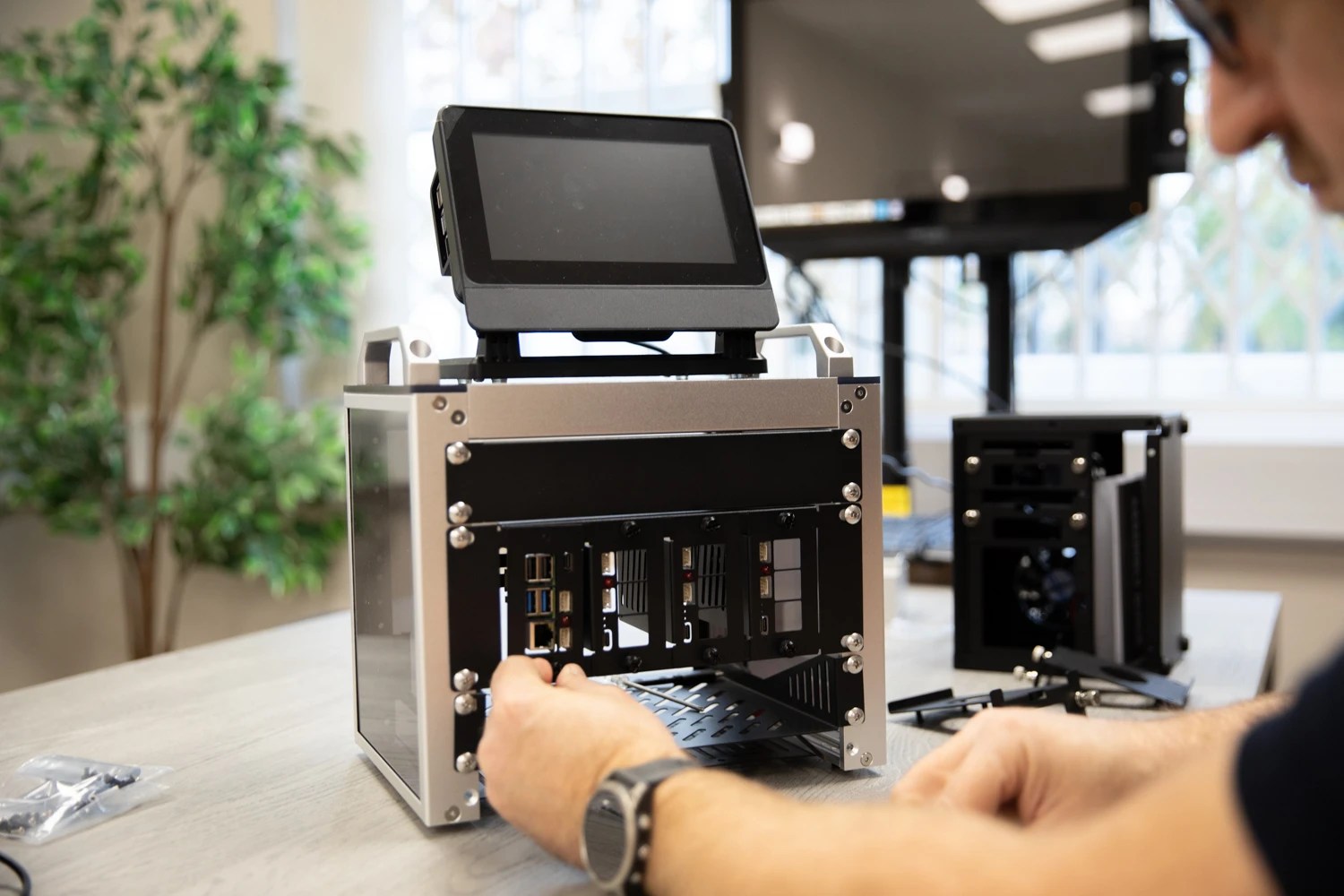
Data-driven Action at the Edge
The real advantage of edge computing lies in the ability to perform data processing locally. In many industrial environments it is not practical to wait for cloud-based systems to respond isn’t feasible. ScalerPi can provide an infrastructure that is not dependent, but it is able to connect with other systems, if required.
The system would not be complete without the industrial Raspberry Pi IoT gate, that is the main link between apps and devices. The gateway facilitates seamless communications between machines, sensors as well as software platforms. Data is sent securely and efficiently. This allows real-time monitoring of operations, early detection of any issues and a consistent performance across all sites.
This technology can be transformative in industries like logistics and environmental monitoring. The systems are capable of functioning in areas with poor connectivity or distant locations to ensure that data and operations remain available.
Compact Power for Demanding Environments
One of the most difficult issues for industrial computing is to balance performance and practicality. While big servers are a great source of power, they are often expensive, consume a significant amount of energy, and possess limited capacity. ScalerPi solves this issue with industrial Raspberry Pi servers that deliver reliable computing in a compact size, and energy efficient.
These servers were designed to operate in real-world conditions in which power and space are restricted. If they are installed in a factory or a retail outlet or a remote monitoring station, they will provide the same performance, without the need for an extensive infrastructure. The modularity of their design allows businesses to expand their systems over time, while coordinating growth with actual needs.
Taking this a step further, the compact industrial Raspberry Pi compute module server offers even greater versatility. These servers, designed for extreme conditions, come with robustness and high-end processing capabilities. They are suitable for applications that require constant operation, such as smart city systems, industrial automation configurations.
Containerized deployment allows for flexibility
Containerization is a key element of modern infrastructure. ScalerPi integrates industrial Raspberry Pi docker environments to allow an efficient and flexible management of applications. Docker allows businesses to launch, upgrade and scale applications quickly, without affecting existing processes.
This makes development easier and helps ensure consistency across deployments. This allows applications to be tested in one location and seamlessly transferred to another. This reduces the risk of error and enhances overall reliability. This level of control that is crucial for companies with multiple sites is extremely beneficial.
Containerization is also an instrument to foster innovating. Teams can experiment and test new features without impacting existing systems.
Practical Solutions for a variety of sectors
ScalerPi’s strength lies in its capacity in adjusting to various industries. In the manufacturing industry industrial automation, Raspberry Pi enables pre-planned maintenance, which can help reduce time to repair and improve efficiency. The machines are able to transmit and share data, creating a unified and intelligent work environment.
Edge solutions in agriculture aid in more efficient farming. Sensors monitor soil conditions, weather patterns and health of the crop. This allows farmers to make educated decisions that boost yields and conserve resource.
Real-time information about customer behavior is beneficial to the hospitality and retail sectors. Businesses can improve the customer experience through optimizing their business processes. This includes digital signage and queue management. Projects in the public sector like smart cities depend on cutting-edge technology for tasks like environmental monitoring and asset tracking.
The bridge between Hardware and Cloud with confidence
What makes ScalerPi stand out is the ability it has to bridge the gap between physical devices as well as cloud-based systems. It creates an unified platform through the combination of hardware expertise and modern cloud practices.
The result is that businesses can expand without adding complexity. The infrastructure is easily manageable, cost-effective and secure whether you begin with a modest installation, or grow to thousands of devices. Transparent pricing, modular design and user-friendly simplify the deployment process. This enables organizations to focus on innovation and not operations-related issues.
Industrial Technology for the Future
As the development of industries continues increasing the demand for a more efficient and flexible infrastructure will rise. ScalerPi offers a solution that fulfills these requirements by combing the power of cutting-edge computing with the flexibility of Raspberry Pi technology.
Each component of the system, from industrial Raspberry Pi servers to advanced IoT Gateways and containerized apps has been designed to provide scaling and usability. This results in an infrastructure that is not just able to meet modern requirements but also prepares companies for the challenges of the future.